Biofertilizer & Biopesticide Production Processes: The Key to Sustainable Agriculture
Biofertilizers and biopesticides are eco-friendly and effective alternatives to chemical fertilizers and pesticides. Today, the agricultural sector is turning to biological solutions to both increase productivity and protect the environment. But what exactly are these products, and how are they produced?
In this article, we will define the new trends in sustainable agriculture, explain their production processes, and highlight the critical role of fermenters and spray dryers in these processes.
What is a Biofertilizer?
Microorganism-based products used to improve soil health and support plant growth. Nitrogen-fixing bacteria, phosphate-solubilizing microbes, and organic matter-degrading microorganisms are the main components of biofertilizers. By enriching soil biodiversity, biofertilizers enhance plant resistance to diseases and promote healthier development.
Using biofertilizers maintains the natural balance of the soil, optimizes nutrient uptake, and reduces the need for chemical fertilizers, thereby supporting sustainable agriculture. This approach protects the environment and improves agricultural productivity over the long term.
What is a Biopesticide?
Biopesticides are natural or microorganism-based products used to control plant pests and diseases. Unlike chemical pesticides, biopesticides are less harmful to the environment and human health.
Biopesticides can be classified into three main categories:
- Microbial Biopesticides
- Plant-Based Biopesticides
- Biochemical Biopesticides
Biofertilizer and Biopesticide Production Processes
The production of these agricultural products is a multi-step, controlled bioprocess chain that begins with selecting the target microorganism and extends to industrial scale-up. Each stage is critical for product quality, stability, and biological activity.
The general production steps include:
- Microorganism Selection and Preparation: Specific microorganisms such as bacteria, fungi, yeast, or actinomycetes are selected based on the product’s function. Pure cultures are prepared, and the microorganism’s susceptibility to contamination and growth kinetics are analyzed.
- Fermentation: Microorganisms are cultured in fermenters under optimal conditions to achieve high yields. Batch, fed-batch, or continuous fermentation strategies are applied depending on metabolic requirements.
- Harvesting and Concentration: The culture is concentrated to produce liquid or semi-solid forms.
- Drying and Stabilization: The final product is stabilized for physical durability and long shelf life. Spray drying converts it into powder, enhancing shelf life and portability.
- Packaging and Distribution: Products are packaged appropriately for end-users.
The Importance of Fermenters in Biological Production
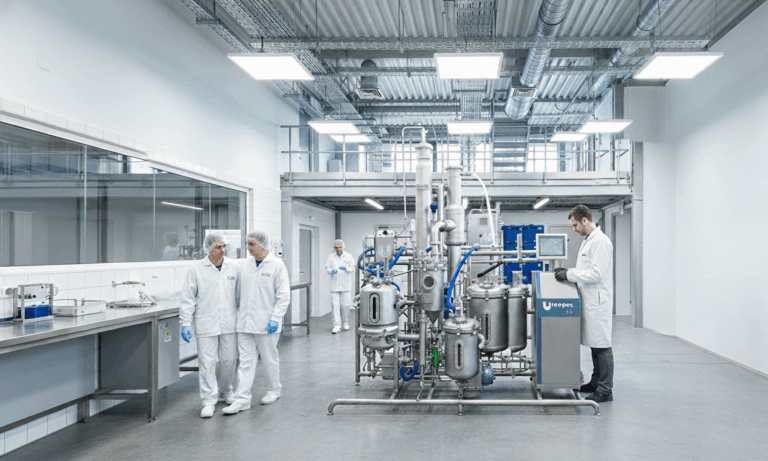
Fermenters are closed systems in which microorganisms are cultured under controlled conditions. In biological productions, product quality, microorganism yield, and process reproducibility heavily depend on fermenter technology. Therefore, fermenters are indispensable in modern agricultural biotechnology applications, both in R&D and industrial-scale production.
Key advantages of fermenters:
- Controlled Environment: Fermenters allow precise adjustment of critical process parameters such as temperature, pH, dissolved oxygen (DO), agitation speed, pressure, and foam control. These controlled conditions enable microorganisms to achieve optimal metabolic activity and stable growth kinetics.
- Aeration and Mixing: Oxygen transfer rate (OTR) is a key factor affecting microbial growth yield. High-efficiency impellers, sparger systems, and airflow control units in fermenters ensure homogeneous oxygen distribution in the culture medium, providing ideal production conditions for both aerobic microorganisms and spore-forming species used in biopesticide production.
- Scalable Production: It is crucial to scale laboratory-level studies to large industrial systems while maintaining product quality. Automation systems and stable process parameters in fermenters ensure smooth scale-up.
- Real-Time Data Monitoring and Automation: Fermenters, equipped with touchscreen control units and advanced software, allow real-time monitoring, recording, and automatic optimization of all production parameters. This provides significant advantages in quality control and process reproducibility.
Fermenters ensure the safe and efficient production of biological products, raising quality standards in the agricultural sector.
Product Stabilization with Spray Dryers
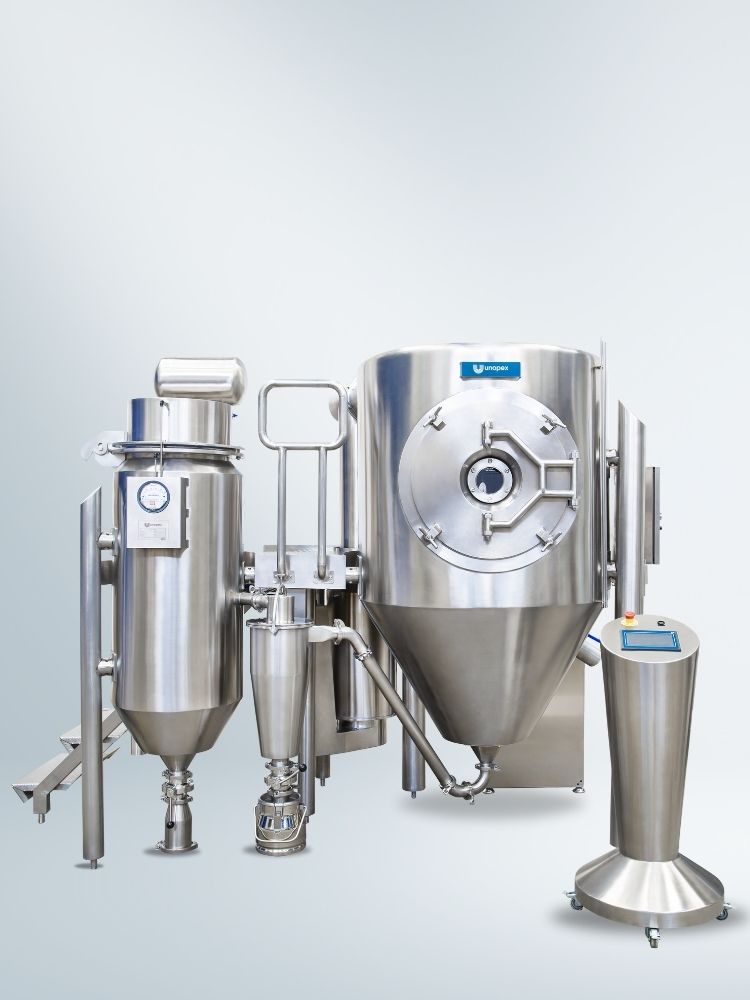
Spray dryers convert liquid products into powder form, increasing shelf life and ease of use. The spray drying process involves atomizing the liquid culture into fine droplets and exposing them to hot air for rapid drying. This rapid dehydration preserves microorganism viability and prepares the product for application.
Advantages of spray drying:
- Easy Storage and Transportation: Powdered products occupy less space, do not require a cold chain, and can be stored for extended periods without deterioration, reducing logistical costs.
- Product Stability: Spray drying halts microbial metabolic activity while maintaining viability. This ensures high CFU counts in biofertilizers and maintains the effectiveness of active biological agents in biopesticides.
- Application Convenience: Powdered products are practical for field applications, drip irrigation, broadcasting, or mixture formulations.
Spray dryers enable the industrial-scale use of biological products.
Conclusion
Biofertilizers and biopesticides are critical tools supporting the sustainability goals of modern agriculture. Fermenters and spray dryers ensure quality and effectiveness throughout the production process. Proper production and control methods increase field productivity while minimizing environmental impact.
Investing in biological agricultural products is a strategic step to protect nature and achieve long-term agricultural success. As sustainable farming practices gain traction, the use of bio-products will become increasingly widespread, playing an important role in leaving healthy soils and a clean environment for future generations.