Spray Drying of Blood Plasma: From Liquid to Functional Powder
Spray drying of blood plasma is an advanced drying technology that transforms a highly perishable liquid into a microbiologically safe, stable and easy-to-handle powder. By carefully controlling process conditions, manufacturers can preserve bioactive proteins and functional components while gaining major advantages in storage, transport and formulation flexibility.
What Is Blood Plasma and Why Dry It?
Blood plasma is the liquid fraction of blood, rich in proteins (albumin, globulins, immunoglobulins), electrolytes, hormones, growth factors and other bioactive molecules.
In its native liquid form, plasma:
- Requires refrigeration or freezing
- Has a limited shelf life
- Is bulky and costly to transport
- Is more vulnerable to microbiological spoilage
Spray drying addresses these challenges by converting plasma into a low-moisture powder that:
- Has significantly extended shelf life
- Is easier and cheaper to store and ship
- Can be precisely dosed and blended into foods, feeds or medical formulations
- Retains most of its nutritional and functional protein properties when properly processed
Process Flow: How Spray Drying of Blood Plasma Works
Although individual plants differ in design, the industrial process for spray drying of blood plasma typically follows these steps:
- Raw material collection
- Blood is collected from animals that have passed veterinary inspection and are approved for human consumption.
- An anticoagulant (often citrate) is added to prevent clotting.
- Plasma separation and chilling
- Red blood cells are removed by centrifugation.
- The plasma fraction is chilled and transported under controlled conditions to the processing facility.
- Concentration
- Plasma may be concentrated by membrane filtration or vacuum evaporation to reduce water content and improve dryer efficiency.
- Plasma may be concentrated by membrane filtration or vacuum evaporation to reduce water content and improve dryer efficiency.
- Atomization
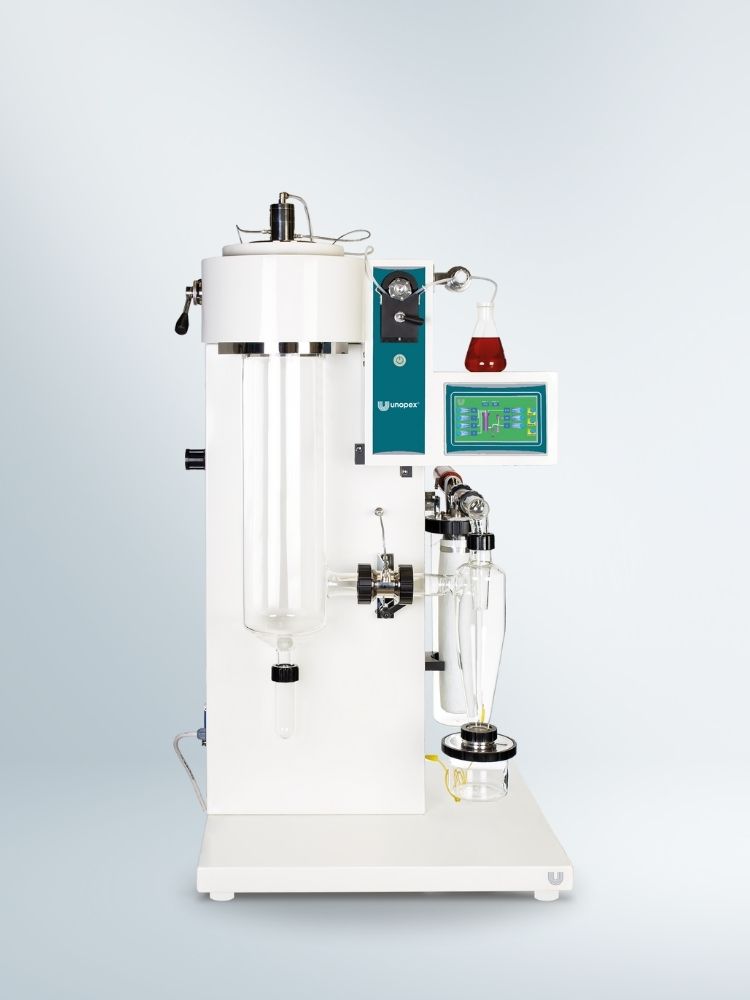
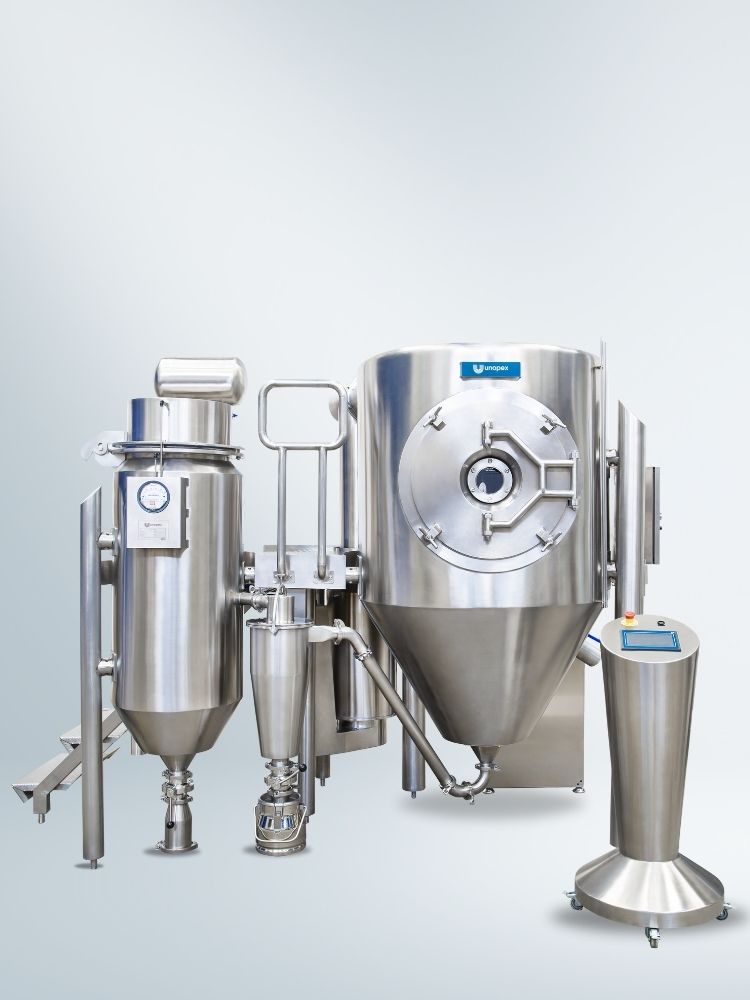
- The liquid plasma (or concentrate) is pumped to the spray dryer and atomized through a nozzle or rotary atomizer, creating fine droplets.
- The liquid plasma (or concentrate) is pumped to the spray dryer and atomized through a nozzle or rotary atomizer, creating fine droplets.
- Drying
- Droplets are exposed to hot air in a drying chamber.
- Process conditions are adjusted so the product reaches high enough temperatures (around 80 °C throughout the particle) for safety, while minimizing protein denaturation.
- Powder collection and cooling
- Dried particles are separated from the air stream (cyclone, bag filter) and cooled.
- The powder is then packaged under controlled conditions to protect it from moisture and contamination.
Modern plants may also integrate UV-C irradiation of liquid plasma as an additional biosafety step, further inactivating bacteria and viruses before drying.
Critical Process Parameters in Spray Drying of Blood Plasma
To obtain a high-quality blood plasma powder, technologists carefully balance several key parameters:
- Inlet and outlet air temperatures
- Too low: product remains sticky or insufficiently dried.
- Too high: proteins denature, resulting in reduced solubility and loss of biological activity.
- Atomizer type and droplet size
- Nozzle vs. rotary atomizers influence particle size distribution and morphology.
- Smaller droplets dry faster and can yield finer powders; larger droplets may improve flow but require more energy.
- Feed rate and solids content
- Higher feed rates increase capacity but can reduce drying efficiency.
- Optimizing protein concentration and viscosity helps achieve stable atomization and consistent particle formation.
- Airflow pattern and residence time
- Co-current vs. counter-current airflow affects maximum particle temperature and heat exposure time.
- Residence time must be long enough for complete drying but short enough to protect heat-sensitive proteins.
The overall goal is to produce a powder with controlled particle size and morphology, good instant solubility, and minimal damage to albumins, globulins and immunoglobulins.
Functional Properties of Spray-Dried Plasma Powder
Drying changes the physical state of plasma proteins, which can significantly influence their behavior in end products. Studies comparing spray-dried, freeze-dried and other dried plasma powders show that:
- The gelation behavior and texture of plasma gels are sensitive to the drying method and ash content.
- Spray-dried powders often provide good water-holding capacity and manageable gel strength, useful in processed meat and other formulated products.
- Excessive heat or oxidation during drying can affect protein structure, reducing functional properties such as emulsification, foaming and gel formation.
For industrial users, the most important quality attributes of spray-dried plasma include:
- Low moisture content and good flowability
- Fast and complete reconstitution in water
- High solubility of proteins
- Controlled color and flavor profile
- Microbiological safety and pathogen reduction
By fine-tuning the spray drying conditions, manufacturers can tailor these properties for specific applications—whether the goal is high gel strength, neutral taste, or maximum solubility.
Applications in Animal Nutrition, Human Nutrition and Medicine
1. Animal Nutrition and Functional Feeds
Spray-dried animal plasma (SDAP) and spray-dried porcine plasma (SDPP) are widely used in pig, poultry and aquaculture feeds as functional protein ingredients. Research shows that such ingredients can:
- Improve growth performance and feed efficiency
- Support gut health and intestinal integrity
- Help modulate immune responses
- Reduce morbidity and mortality, particularly in young animals
In this context, spray drying of blood plasma is not only a preservation technology but also a way to create high-value functional feed additives that can partially replace antibiotics as growth promoters.
2. Human Nutrition and Sports Supplements
Spray-dried blood plasma can be processed into protein isolates or concentrates that are rich in:
- High-quality proteins and essential amino acids
- Bioactive peptides
- Immunoglobulins and growth factors
These characteristics make plasma-derived powders interesting candidates for:
- Specialized nutritional supplements
- Sports nutrition formulas
- Medical nutrition products for recovery or immune support
However, human applications must comply with strict regulatory frameworks regarding source material, processing, safety and labeling, and are often developed as niche medical or clinical products rather than mainstream supplements.
3. Medical and Clinical Uses
Scientific studies indicate that spray-dried plasma preparations from porcine or bovine sources can help alleviate mucosal inflammation and improve intestinal barrier function in experimental models, and have shown benefits in certain patients with enteropathy.
Potential clinical applications include:
- Supportive therapies for gut-related disorders
- Components in specialized enteral or parenteral formulas
- Research tools in immunology and inflammation studies
Although promising, these uses are tightly regulated and must be backed by robust safety and efficacy data.
Safety, Quality Assurance and Regulatory Considerations
Because blood plasma is a biologically active material, biosafety is central to any spray-drying process. Modern manufacturing lines incorporate multiple safety barriers, for example:
- Sourcing blood only from healthy, inspected animals
- Rapid cooling and hygienic handling of plasma
- Centrifugation and filtration to remove cells and impurities
- High-temperature spray drying (around 80 °C throughout the product) for effective pathogen reduction
- Optional UV-C irradiation of liquid plasma as an additional inactivation step
- HACCP-based process control, traceability and regular microbiological testing
Regulatory requirements vary by jurisdiction (food, feed or medical use), but typically cover:
- Approval of source materials and slaughterhouses
- Validation of pathogen reduction steps
- Limits for contaminants and residues
- Correct labeling and intended use (feed vs. food vs. medical product)
Aligning spray drying of blood plasma with these regulations is essential to ensure safety and market acceptance.
Conclusion: Future Opportunities for Spray Drying of Blood Plasma
Spray drying of blood plasma is a powerful technology that converts a sensitive biological liquid into a stable, functional and highly versatile powder. When process conditions are carefully optimized, manufacturers can preserve the activity of key proteins, achieve excellent solubility and reconstitution, and deliver powders tailored for animal feeds, specialized nutrition and emerging medical applications.
As demand grows for high-value proteins, functional ingredients and sustainable use of slaughterhouse by-products, spray drying of blood plasma will continue to open new opportunities across nutrition, medicine and biotechnology. If you are developing new products in these areas, this technology is a strong candidate to consider in your formulation and process design strategy.